





EMDR Therapy at a Glance
-
What it is: A structured, heavily researched therapy that uses bilateral stimulation (guided eye movements or tapping) to help your brain correctly file away painful or traumatic memories.
-
The Goal: To take the “emotional sting” out of past experiences so they no longer trigger panic, anxiety, or hypervigilance today.
-
The Timeline: Typically takes 6 to 12 sessions. You do not have to talk about your trauma in intense detail to get relief.
-
Success Rate: Clinical studies show that 84% to 90% of single-trauma victims no longer show PTSD symptoms after just a brief course of treatment.
What is EMDR Therapy and How Does It Actually Work?
EMDR stands for Eye Movement Desensitization and Reprocessing. While the name sounds highly technical, the concept is grounded in natural neurobiology: it helps your brain reboot how it stores distressing memories.
When you go through a deeply stressful or traumatic event, your nervous system can become overwhelmed. Instead of processing the memory normally, your brain essentially freezes it in place, trapping the original sights, emotions, and physical panic responses. This is why a random smell, a sudden sound, or a stressful moment today can instantly make you feel like you are reliving the past.
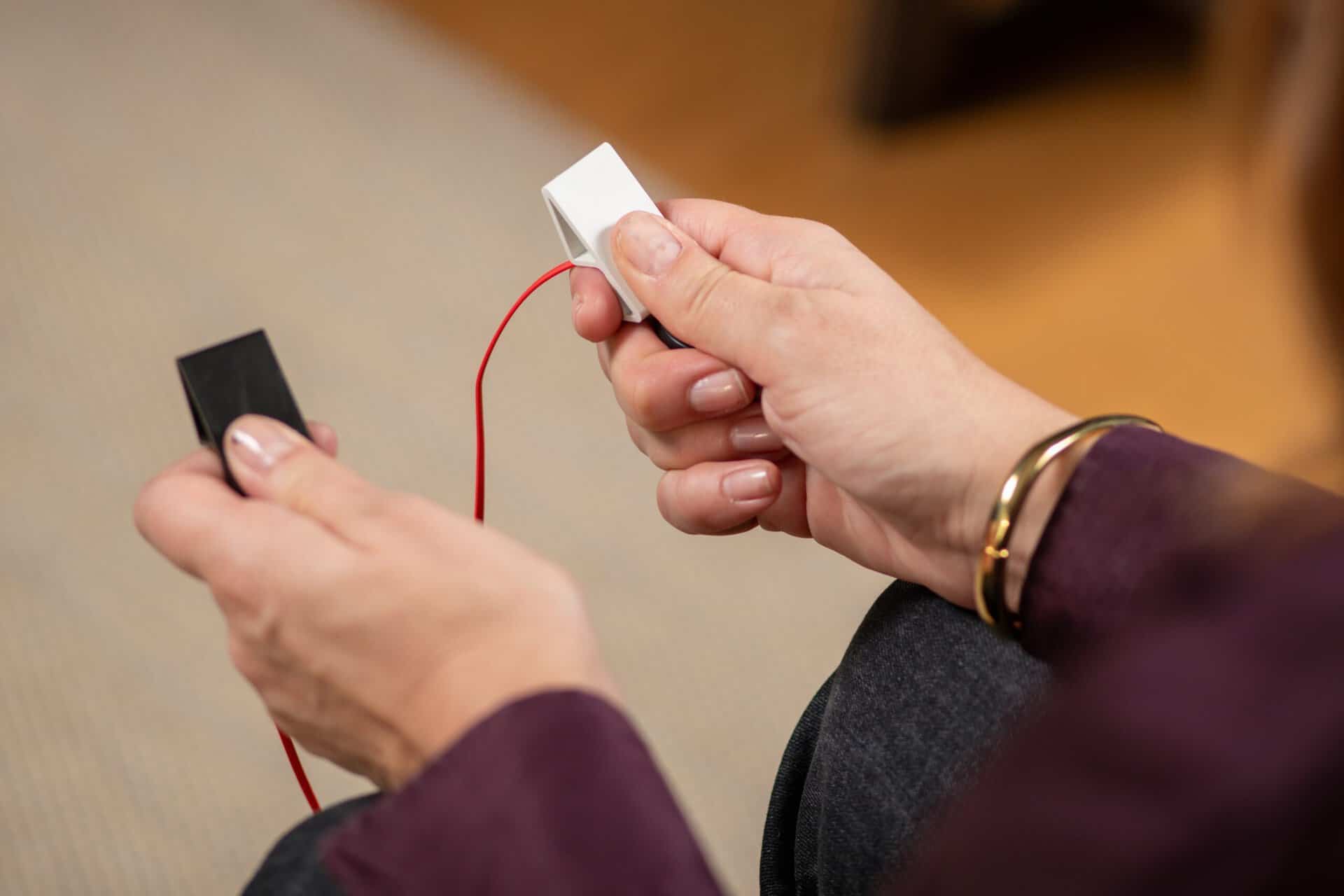
During an EMDR session at our Irvine clinic, our licensed therapists use bilateral stimulation, usually gentle, rhythmic eye movements, alternating audio tones, or handheld pulsing taps. This rapid, side-to-side tracking mimics the exact brain activity that happens during REM sleep. This biological process unlocks those trapped memories, allows your brain to safely re-archive them, and strips away their emotional distress. You will still remember what happened, but the physical panic and emotional trigger will be gone.
Who is EMDR Therapy For?
EMDR is recognized as a first-line, gold-standard intervention by major global health organizations, including the World Health Organization (WHO) and the American Psychological Association (APA). It is highly effective for anyone whose past is actively interfering with their present peace of mind.
We provide EMDR therapy to help Orange County residents recover from:
- Post-Traumatic Stress Disorder (PTSD): From childhood trauma, sudden accidents, medical emergencies, or physical/emotional abuse.
- Complex Trauma (C-PTSD): From long-term, ongoing relational stress, toxic family environments, or chronic neglect.
- Severe Anxiety & Panic Disorders: For individuals whose nervous systems are stuck in a constant, exhausting "fight-or-flight" state.
- Unresolved Grief & Loss: When the pain of a life transition or loss feels completely immovable after years.
Easy Coverage Help
Your Insurance Can Pay for EMDR In Orange County
Because EMDR is a medically recognized trauma treatment, it is usually covered by health insurance when included in our inpatient program. We work with most major insurance providers to maximize your benefits and lower your out-of-pocket costs. Our team handles the entire verification process for you, free and confidentially, so you know your coverage right away.
Symptoms We Treat with EMDR in Irvine
Trauma and chronic stress don’t just sit in your thoughts—they alter your physical nervous system. We use target-specific EMDR protocols to clear out the following daily symptoms:
- Flashbacks, intrusive thoughts, and vivid, disruptive nightmares.
- Sudden panic attacks, racing heart, and unexplained chest tightness.
- Chronic hypervigilance (permanently waiting for the other shoe to drop).
- Emotional numbness, social withdrawal, or feeling "dissociated" from your body.
- Deeply rooted negative core beliefs like "I am not safe," "It was my fault," or "I am broken."
The 8 Phases of EMDR: A Journey That Evolves Over Time
A common myth is that you cover all of EMDR in a single visit. In reality, EMDR is a structured roadmap that unfolds carefully over multiple sessions to protect your emotional safety and ensure permanent healing.

Phase 1: History Taking and Treatment Planning (Sessions 1-2)
Your journey begins with a collaborative mapping process. Our Irvine trauma therapists get to know your background, identify specific target memories or recurring triggers causing you distress today, and design a customized treatment plan tailored to your recovery goals.

Phase 2: Preparation and Grounding (Sessions 2-3)
We never dive into traumatic memories without a safety net. During this phase, your therapist teaches you practical, immediate stress-management tools, somatic relaxation techniques, and visualization exercises. You only move forward when you feel completely stable and in control.
Phase 3: Assessment (The Start of an Active Processing Session)
Once you are fully prepared, we isolate a specific target memory to clear. We pinpoint the exact image that causes you stress, identify the negative belief you hold about yourself because of it (such as "I am helpless"), and select the positive belief you want to replace it with ("I am safe now").

Phase 4: Desensitization and Reprocessing
This is where the active neurobiological healing happens. While you hold the memory in your mind, your therapist uses bilateral stimulation (guided eye movements, rhythmic tapping, or alternating audio tones). This process dampens your amygdala's alarm system, lowering the memory’s distress level until it hits zero.

Phase 5: Installation
After the distress has been cleared, we focus entirely on cognitive restructuring. We use continued bilateral tracking to strengthen and lock in your new, positive belief so it permanently binds to that past event, replacing old feelings of shame or fear with resilience.

Phase 6: Body Scan
Trauma stores itself physically in your nervous system. Your therapist will guide you through a head-to-toe scan to check for any residual physical tension, chest tightness, or somatic discomfort. If any stress is detected, we use targeted bilateral stimulation to clear it from your body.

Phase 7: Closure (The End of Every Active Session)
Every single active processing session ends with intentional grounding work. Your therapist ensures your nervous system is fully regulated, calm, and stable before you walk out our doors, providing a safe transition back to your daily life.

Phase 8: Reevaluation (The Start of Every Subsequent Session)
At the very beginning of your next visit, we check in on your progress. We ensure that the emotional relief and cognitive shifts from your previous session have locked in permanently before we ever move on to address a new memory.

While understanding these 8 phases helps demystify the process, the key to successful trauma recovery is working with a clinician who knows exactly how to guide you through them safely.
Highly Trained EMDR Specialists in Irvine, CA
True, lasting clinical trauma recovery requires specialized expertise. At New Journeys Behavioral Health, we maintain the highest standards of clinical excellence.
Our trauma-informed therapists have completed comprehensive training under the strict guidelines established by EMDRIA (EMDR International Association) and the EMDR Institute (EMDRI), which was founded by the original developer of EMDR, Dr. Francine Shapiro. We combine these rigorous, gold-standard neurological strategies with a warm, direct, and collaborative environment right here in the heart of Orange County.

Leah Dean, LMFT
Clinical Director

Dr. Sanjai Thankachen, MD
Supervising Psychiatrist

Brooke Meltzer-Washington, MSW
Career Working
What to Expect inside a Single EMDR Session at New Journeys in Irvine, CA
If you are entering an active processing session (Phases 3–7), here is exactly what your hour looks like. There are no surprises:
- Step 1: Setting the Target (10 Mins): You choose one specific memory to focus on. You only need to share the general concept with your therapist—you don't have to explain every detail out loud.
- Step 2: The Bilateral Tracking (30 Mins): You follow your therapist's fingers, a light bar, or rhythmic audio tones with your eyes while letting your brain notice whatever thoughts, feelings, or physical sensations naturally come up. Your therapist will pause the movement every 30–60 seconds to check in briefly.
- Step 3: Discharging and Grounding (15 Mins): Once the distress of the memory drops, we spend the final portion of the session utilizing your relaxation tools, making sure you feel entirely calm, centered, and physically relaxed before walking out our doors.
Frequently Asked Questions (FAQ)
Do I have to talk about my trauma in detail?
No. This is one of the biggest benefits of EMDR. Unlike traditional talk therapy, you do not have to describe the painful or embarrassing details of your past out loud. Your therapist just needs you to focus on the memory internally so your brain can do the processing work. You share only what you feel comfortable sharing.
How many sessions of EMDR will I need?
While every individual’s story is unique, a standard course of EMDR therapy typically takes between 6 to 12 sessions to fully process a specific set of traumatic events. Many clients report experiencing noticeable relief from their symptoms within the first few processing sessions. Complex, long-term childhood trauma can take longer as we systematically work through different layers of memories.
Is EMDR safe? Are there any side effects?
Yes, EMDR is a highly safe, non-invasive, and evidence-based medical protocol. Because it triggers your brain’s natural healing process, it is common to experience vivid dreams, light emotional vulnerability, or physical tiredness for a day or two after an active session. This is completely normal—it is a physical sign that your nervous system is actively unpacking and filing away old stress.
Can EMDR be done online, or do I have to come to the Irvine office?
We integrate EMDR into our inpatient mental health program because trauma healing is vastly safer and more effective in person. Reprocessing heavy memories can trigger an immediate “fight-or-flight” response. On a screen, a therapist cannot read your body language or offer immediate grounding if you get overwhelmed. In our inpatient program, you have 24/7 clinical support—meaning you never have to log off a video call and face your stressors completely alone.
Does insurance cover EMDR therapy at your facility?
Yes. Because EMDR is an evidence-based, medically recognized treatment for trauma, it is typically covered by insurance when integrated into our inpatient mental health programs.
We work with a wide range of major commercial insurance providers to help maximize your benefits and minimize your out-of-pocket costs. Our admissions team will handle the insurance verification process for you directly, so you know exactly what is covered before you even begin your stay. Call 866 954 6899 to get started.